
FOOD
It sounds obvious. Of course food matters. But not everyone has enough.
A couple of years ago, after on-site medical evaluations of the children and youth in our programs, we discovered that way too many of them were undernourished. Or worse. We began to provide healthy snacks of fruit and protein and vegetables and saw the health issues improve, saw energy levels rise, and a rising level of stable cognition in school work. And more laughter.
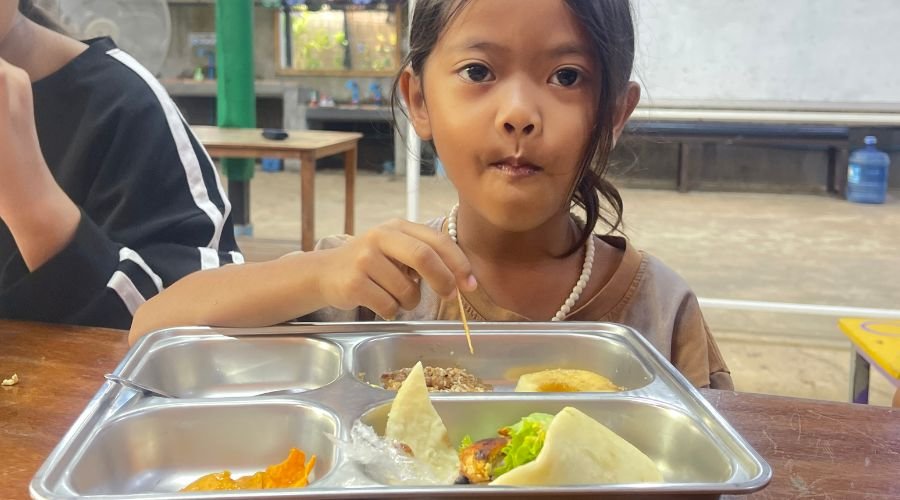
We moved beyond snacks and now provide around 103 meals each day. What started as something small quickly became something substantial and absolutely essential.
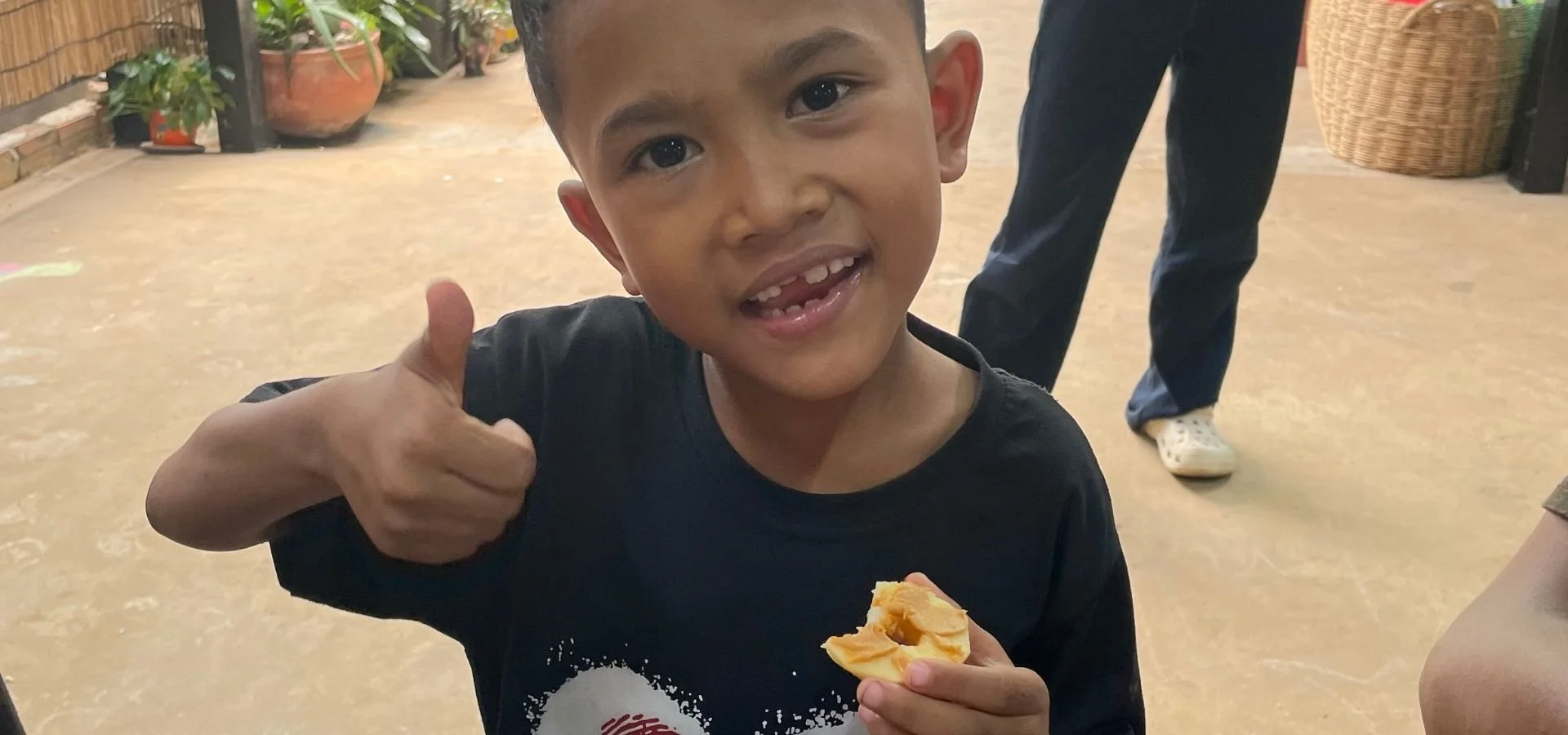
A favorite part of meals here is a very simple treat that the children often save for a sort of dessert after the rest of their meal. It’s just apple slices with peanut butter, cut into little rounds like doughnuts. Usually every bit is eaten but that day, well… a couple of the kids had a few leftover pieces—two bites here, a scrap there. Nothing that would normally be kept.
But the children carefully wrapped them and tucked them into their school bags because they didn’t want to miss out on any bites.
A bit later, as the kids were gathering to leave, chaos erupted. Ants, thousands (maybe millions) of them, had lain siege. They had scouted out every last bit of sweetness - as ants do - and sent in all the troops. They were everywhere!
Did we mention chaos?
There was shrieking, laughter, some frustration, a lot of shaking out of bags, jumping around and brushing off clothing. In Siem Reap, the ants are relentless. They always win. Especially when peanut butter is involved.
But what stays with us isn’t the ants. It’s seeing, in that moment, the instinct of the children to save those last few bites in the first place. It’s like a muscle memory of scarcity. The instinct to save because there is no certainty that there will be more later.
And then there are the stories that are much harder to tell.
Recently, a father in the Siem Reap community went out to catch fish to feed his family. It’s something many people do—using whatever means they have, often in difficult and unsafe conditions. In this case, he was fishing in a polluted drainage area using electricity to help him catch the fish, because you are almost guaranteed to go home with something for your family to eat. Something went wrong. We don’t know what for sure. But he was electrocuted and fell into the water.
He leaves behind a wife and two young daughters.
It is a devastating story, and one that is not easily shared, but which speaks to a reality that can’t be softened: when food is not secure, people are pushed to take risks they should never have to take.
This is the backstory of food here. It isn’t just about nutrition. There is uncertainty and risk, and the quiet, constant pressure on families.
When we talk about Match It May, this is part of what we are trying to address.
Match It May is Heartprint’s annual giving campaign, where donations made during the month are matched—doubling, tripling, or more the impact of each contribution. Supporters can choose where their donation goes: toward nutrition, education and tutoring, youth mentoring, house builds, pregnancy support, training, or other community programs. This year, the nutrition program is being highlighted because it is one of the most immediate and ongoing needs. It is a daily commitment, and a significant, consistent cost.
Because every single day, those 103 meals need to be there, with no child wondering if they will go hungry. We must leave no gaps.
A meal is both simple and heartbreakingly complex. Its reliability changes everything.
As always, thank you.
